
Vent Axia Repair in Ireland — Professional Maintenance and Diagnostics
If your Vent-Axia MVHR system is noisy, losing airflow, entering constant boost mode or showing error codes, fast repair is essential to protect indoor air quality and prevent long-term damage. We repair all Vent-Axia models, including Advance S, Advance SX, Sentinel Kinetic, Kinetic Plus and BH units. We diagnose faults, restore airflow and fix performance issues across Dublin and nationwide.
Disclaimer (Vent-Axia)
Eco Vent is an independent ventilation specialist. In our professional view, Vent-Axia is a solid and reputable brand, and we regularly recommend Vent-Axia products because they typically offer an excellent quality-to-price ratio.
That said, Vent-Axia has a significant market share in Ireland, so in day-to-day terms we naturally receive a higher number of enquiries involving Vent-Axia units compared with less common brands. This does not mean Vent-Axia products are unreliable.
Based on our servicing and repair experience, Vent-Axia units rarely fail when they are installed correctly and maintained in line with the manufacturer’s guidance. The majority of issues we are asked to resolve are typically linked to one (or more) of the following:
- Lack of servicing and/or filter replacement (sometimes for many years), which increases strain on fans, sensors and controls and can lead to faults.
- Installation issues, including condensate management problems. A pattern we occasionally see is condensate leaks caused by improvised or DIY condensate drains, which can fail over time and allow moisture to enter areas it should not.
If you want to understand what “proper maintenance” looks like (and what to avoid), see our guide: Ventilation cleaning and maintenance guide
Eco Vent is not affiliated with, endorsed by, or acting on behalf of Vent-Axia. Any brand names are used for identification purposes only and remain the property of their respective owners.

Table of Contents
Vent Axia Not Working – Common MVHR Faults
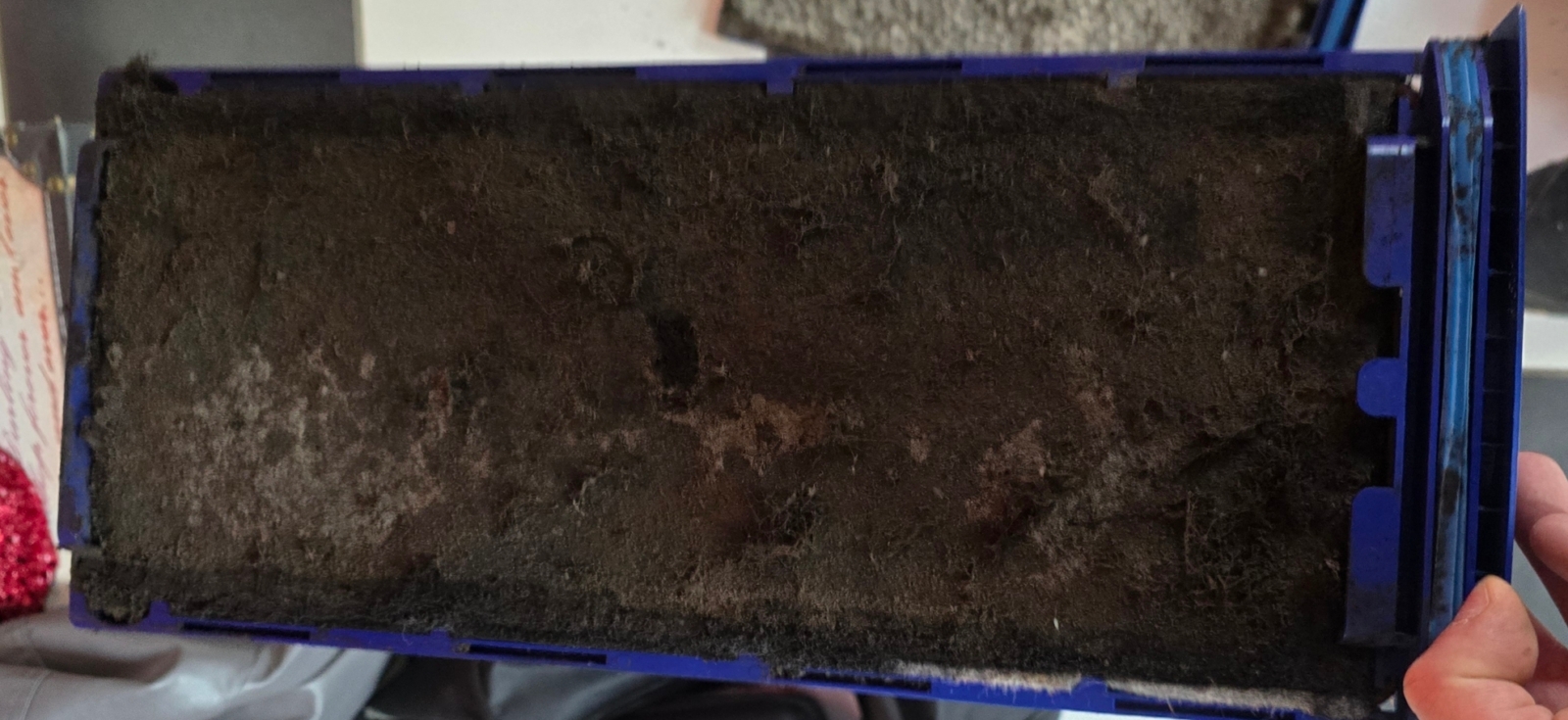
Vent-Axia systems are highly reliable, but once airflow drops or sensors drift, the unit quickly loses efficiency.
Our troubleshooting process follows TGD Part F airflow requirements and S.R. 54:2014+A2:2022 commissioning standards to identify the exact fault and restore correct performance.
Below are the most frequent issues we diagnose in Irish homes, including units operating with error codes, noise, low airflow or incorrect humidity readings.
Fault Codes & Sensor Errors
Vent-Axia MVHR units report faults using numerical codes displayed on the control panel. Codes differ between model ranges — always check your unit’s stock reference number before diagnosing.
Sentinel Kinetic B / BH / S BH / V / VS
Models: Kinetic B, Kinetic BS, Kinetic BH, Kinetic S BH, Kinetic V, Kinetic VS
Stock References: 438222, 438222A, 443319, 443319A, 438342, 438342A
| Code | Fault Description |
|---|---|
| 01 | Supply fan not running |
| 02 | Extract fan not running |
| 04 | Control PCB 24V fuse (FS1) failure |
| 08 | Temperature sensor T1 (supply air) faulty |
| 16 | Temperature sensor T2 (extract air) faulty |
| 32 | Wired remote control failure |
Note: Fault codes add together if multiple faults occur. Example: code 03 = 01 + 02 (both fans stopped).
Sentinel Kinetic Plus B / Plus BS / Plus CVP
Models: Kinetic Plus B, Kinetic Plus BS, Kinetic Plus CVP
Stock References: 443028, 447938, 443029
| Code | Fault Description |
|---|---|
| 01 | Supply fan not running |
| 02 | Extract fan not running |
| 04 | Control PCB 24V fuse (FS1) failure |
| 08 | Temperature sensor T1 (supply air) faulty |
| 16 | Temperature sensor T2 (extract air) faulty |
| 32 | Wired remote control failure |
Sentinel Kinetic High Flow / FH
Models: Kinetic High Flow, Kinetic FH
Stock References: 408167, 408169, 408449, 408451
| Code | Fault Description |
|---|---|
| 01 | Supply fan not running |
| 02 | Extract fan not running |
| 04 | Control PCB 24V fuse (FS1) failure |
| 08 | Temperature sensor T1 (supply air) faulty |
| 16 | Temperature sensor T2 (extract air) faulty |
| 32 | Wired remote control failure |
Note: Same fault code system as standard Kinetic range. Codes add together when multiple faults present.
Sentinel Kinetic Advance S
Model: Advance S
Stock Reference: 405215
| Code | Fault Description |
|---|---|
| 01 | Left fan fault |
| 02 | Right fan fault |
| 04 | Left thermistor fault |
| 08 | Right thermistor fault |
| 16 | Left centre thermistor fault |
| 32 | Right centre thermistor fault |
| 64 | Left centre temperature/humidity sensor fault |
| 128 | Right centre temperature/humidity sensor fault |
Critical difference: Code 04 means thermistor fault, NOT fuse failure (unlike standard Kinetic models).
Sentinel Kinetic Advance SX
Model: Advance SX
Stock Reference: 405216
| Code | Fault Description |
|---|---|
| 01 | Left fan fault |
| 02 | Right fan fault |
| 04 | Left thermistor fault |
| 08 | Right thermistor fault |
| 16 | Left centre thermistor fault |
| 32 | Right centre thermistor fault |
| 64 | Left centre temperature/humidity sensor fault |
| 128 | Right centre temperature/humidity sensor fault |
Note: Advance SX has additional flow sensors and Constant Volume control. Fault codes 64/128 cover integrated humidity sensors not present in standard Kinetic models.
Key Differences Summary
| Feature | Standard Kinetic (B/BH/Plus) | Advance (S/SX) |
|---|---|---|
| Code 04 | PCB fuse failure | Left thermistor fault |
| Codes 64/128 | Not available | Humidity sensor faults |
| Sensor naming | T1/T2 | Left/Right |
| Fault summation | Yes (codes add) | Yes (codes add) |
Sources: Vent-Axia official installation manuals (Stock Ref. 438222, 443319, 443028, 405215, 405216). Information verified against manufacturer documentation dated 2009–2021.
Common installation issues:
- Uninsulated ductwork to atmosphere causing thermal shock
- Incorrect condensate fall or dry traps
- Reversed supply/extract on first fix
- Undersized ductwork (100 mm where 125 mm is required)
- Valves adjusted randomly after renovation works
What we do:
- Full diagnostics of sensors
- Correct airflow commissioning to design requirements
- Bypass motor repair and calibration
- Frost logic reset and preheater verification
Low or Unbalanced Airflow
Low airflow is one of the most common MVHR complaints. It is typically caused by:
- Blocked or incorrect filters
- Motor wear or scroll contamination
- Flow sensors drifting out of calibration
- Undersized ductwork or high static pressure
- Valves fully closed after renovation or painting
- Extract branch resistance exceeding design limits
How we fix it:
We measure supply and extract using calibrated equipment, check pressure drops, verify duct dimensions and reset the commissioning profiles to meet design or TGD Part F requirements.
Excessive Noise or Vibration
Fan noise can indicate:
- Worn motor bearings
- Imbalanced impellers
- Loose internal mountings
- Bypass flap partially stuck
- Incorrect duct reducer sizing
How we fix it:
We stabilise the fans, clean motor scrolls, check bypass movement, confirm correct duct sizing.
Constant Boost Mode (False RH or LS Trigger)
Units often remain in boost due to:
- Faulty humidity sensors (64 / 128)
- Drift in internal RH algorithm
- Incorrect LS wiring
- High moisture load in cold weather
- Extract duct leaks pulling air from cold voids
How we fix it:
We recalibrate humidity triggers, correct LS inputs, reseal extract branches and adjust RH thresholds according to dwelling type.
Summer Bypass Not Working
Symptoms include:
- Hot air entering bedrooms during summer
- Bypass stuck open or closed
- “Fresh mode” not activating
- Incorrect indoor/outdoor temperature readings
How we fix it:
We test actuator movement and verify bypass thresholds according to the Vent-Axia specification.
Frost Protection Always Active
A system in permanent frost mode will have:
- Very low supply airflow
- High extract airflow
- Cold rooms
- No heat recovery
Probable causes:
- Failed thermistors
- Blocked outdoor duct
- Preheater malfunction
- Incorrect outdoor temperature readings
How we fix it:
We check ducts, verify temperature sensors, inspect the preheater module and restore normal frost logic.
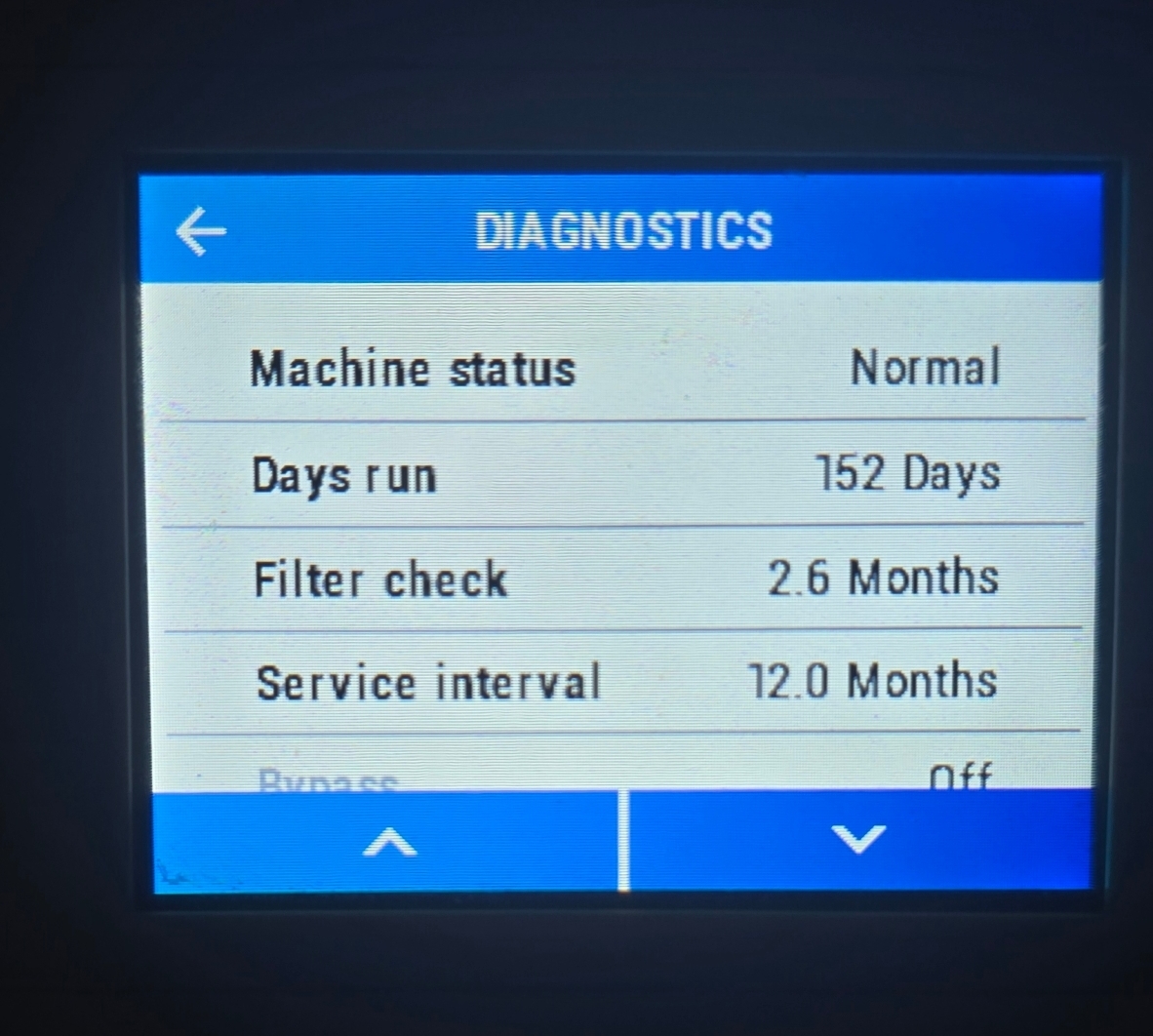
Vent Axia Check Filters Message – Won’t Reset
This is usually caused by:
- Incorrect filter fitting
- Faulty filter timer
- Blocked airflow path
- Drifted pressure sensors (Advance SX)
How we fix it:
We confirm correct filter grade, clean or replace filters, reset the internal timer
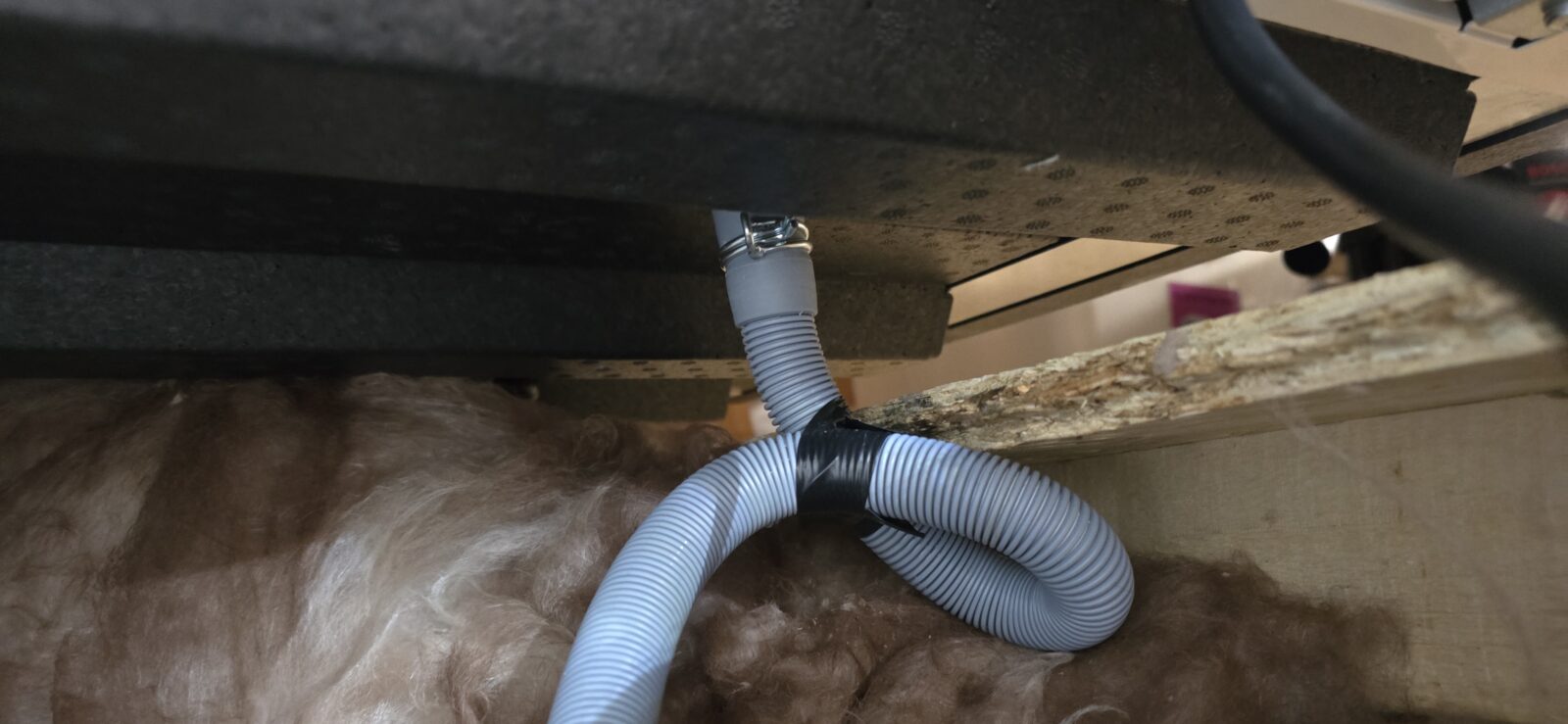
Condensate Leaks or Moisture in the Unit
Leaks typically happen when:
- The trap is dry or incorrectly installed
- The fall is less than recommended
- Freezing conditions block the pipe
- Condensate is connected to incorrect side (LH/RH handing issue)
How we fix it:
We correct the trap, re-route the condensate, insulate external sections and ensure proper fall as per S.R. 54 guidelines.
Vent Axia Not Working Controller
Common causes include:
- Damaged data cable
- PCB communication errors
- Power interruptions
- Software freeze
How We Fix it
We reset the controller, inspect the PCB, update configuration and restore the correct display and control functions.
Vent Axia Repair Costs in Ireland
Typical Vent-Axia Repair Pricing
Repair costs depend on the unit model, the type of fault and the condition of the installation. Most homes require standard diagnostics and minor component repairs, while older MVHR units or heavily restricted ductwork may need more extensive work.
– Standard diagnostic visit: €120–€150
– Fan motor replacement: €250–€350 per fan
– Sensor replacement (thermistor / humidity): €90–€160
– Bypass actuator repair or replacement: €250–€360
– Controller or wiring repair: €150–€220
– Condensate system correction: €80–€180
– Full airflow balancing & commissioning: €300
These ranges cover the most common faults seen in Vent-Axia Sentinel Kinetic, Advance S/SX, Kinetic Plus andHigh Flow.
What Affects the Final Cost?
Costs vary depending on the model, access to the unit, ducting resistance, airflow imbalance, sensor condition, age of the system and the severity of the problem. Homes with older ductwork or incorrectly installed units often require additional balancing or corrective work.
Repair vs Replacement
Most Vent-Axia units can be repaired cost-effectively, especially when issues are related to sensors, fans, filters or bypass actuators. Replacement is only recommended when the unit is very old, severely worn or unable to meet the required airflow performance.
Transparent Pricing
We always explain findings before starting repair work. No hidden fees — you approve everything before it happens.
Vent Axia Maintenance and Repair FAQ
Why is my Vent Axia not working?
Typical faults include fan motor errors (01/02), blocked filters, stuck bypass
Why is my Vent-Axia making noise?
Excess noise usually comes from worn fan bearings, dirty impellers, high duct resistance, or a partially stuck actuator.
Long duct runs, uninsulated ductwork, or incorrect duct reducers can also increase sound levels throughout the system.
Why is my Vent-Axia stuck in boost mode?
This is commonly caused by humidity sensor drift, incorrect LS (live-switch) wiring, high moisture loads, or leaking extract ducts.
Recalibrating sensors, correcting LS inputs, and adjusting airflow settings typically resolves the issue.
What does “Check Filter” mean?
This alert indicates reduced airflow caused by dirty filters, blockages, or a pressure imbalance.
How do I reset the filter warning?
Navigate to Settings → Reset Filter → Confirm.
If the warning does not clear, the system may have a pressure fault, heavily blocked filters, or a failing sensor that needs attention.
Why is my unit stuck in frost protection?
Frost protection issues are typically caused by thermistor faults, freezing outdoor conditions, or problems with the preheater.
Testing the sensors and restoring correct frost logic usually resolves the problem.
How often should Vent-Axia be serviced?
Most Vent-Axia units require servicing every 6-12 months, including filter replacement, cleaning of key components
How much does Vent-Axia repair cost?
Standard repairs usually range from €150–€400, depending on the type of fault.
More complex issues—such as bypass actuator failures or full motor assembly replacements—may cost more.
Can older Vent-Axia units be repaired?
Yes.
Older models can often be restored with new bearings, controller repairs, filter upgrades, duct corrections, or full system rebalancing. Many units that appear “beyond repair” can be returned to reliable, efficient operation.
Vent Axia Not Working ?
Book Professional Repair in Ireland
A poorly performing Vent-Axia MVHR system can lead to high humidity, noise, low airflow, stale odours and rising heating costs. Whether your unit is showing error codes, stuck in boost mode, losing airflow or simply not running the way it should, a professional repair will restore efficiency and comfort.
Eco Vent provides Vent Axia maintenance and repair service for all models, including Sentinel Kinetic, Advance S, Advance SX, Kinetic Plus, High Flow, BH and older MVHR units. We offer fast response across Dublin and nationwide, complete diagnostics, genuine parts and commissioning after every repair.
Get your system running smoothly, quietly and efficiently again.
