
Table of Contents
How to Use Ventilation System (MVHR & MEV) Settings, Filters and Humidity Control
If you are unsure how to use ventilation system controls day to day, you are not alone. Although MVHR and MEV systems are designed to run quietly in the background, your settings and basic upkeep still determine how well they manage humidity, odours, and condensation.
Therefore, this guide focuses on what Irish homeowners actually need: the correct “normal” setting, when to use boost, how to handle summer humidity, and how often to change filters and service the unit.
Understand your system type before you change settings
Before you adjust anything, confirm whether you have MVHR or MEV. Although both improve indoor air quality, they behave differently.
- MVHR (Mechanical Ventilation with Heat Recovery) supplies and extracts air mechanically and recovers heat from outgoing air.
- MEV (Mechanical Extract Ventilation) continuously extracts from wet rooms, while fresh air enters through wall vents and natural leakage paths.
As a result, “how to use ventilation system” best practice depends on which system you own, as well as whether it was correctly designed and commissioned.
The rule that prevents most problems: keep it running steadily
In most homes, the single best habit is simple: run the system continuously at its commissioned normal speed. In other words, avoid switching it off and on, because stop-start operation often leads to humidity swings and stale air pockets.
Moreover, steady background ventilation supports typical Irish compliance expectations under TGD Part F (Ventilation). Likewise, steady operation usually improves comfort, because it reduces peaks rather than trying to “fix” problems after they appear.
Key Topics Overview
How to use a ventilation system in daily life
1) Normal mode (your default setting)
Keep the system on normal all the time. Ideally, normal mode should already match your home’s required airflow rates based on commissioning.
Additionally, make sure terminals are not blocked by furniture, curtains, or paint build-up, because even small restrictions can reduce airflow.
2) Boost mode (use it like a tool, not a lifestyle)
Boost exists for short, high-moisture events. Therefore, use it during and briefly after:
- showers and baths
- cooking (especially frying or boiling)
- occasional indoor laundry drying (if unavoidable)
However, do not run boost all day to fight summer humidity, because you may simply bring in more humid outdoor air and increase noise and running cost.
3) Trickle vents and transfer gaps (especially with MEV)
With MEV, wall vents and under-door gaps matter. Consequently, if vents are closed or doors are sealed tightly with no transfer path, extraction performance drops and moisture lingers.
Similarly, if you notice a room feels “dead” (stuffy or slow to clear), it can indicate a blocked vent, a stuck valve, or poor transfer airflow.
Summer humidity in Ireland: what works and what does not
Summer humidity is a common frustration. Even so, the solution is usually smarter control, not higher fan speed.
Here is what typically works best:
- Boost only for spikes
For example, boost for showers and cooking, then return to normal. As a result, you clear moisture events without over-ventilating for hours. - Contain moisture locally
Keep bathroom doors closed right after showering, and run boost until the steam clears. Likewise, use lids on pots and keep cooking extract active. - Use night cooling strategically
If outdoor air is cooler later, night purging can improve comfort. However, do it carefully so you do not create draughts or pull in damp air unnecessarily. - Be realistic about laundry
Indoor drying adds a large moisture load. Therefore, minimise it where possible, or isolate it and ventilate that area deliberately. - Use a dehumidifier when you need true drying
Ventilation exchanges air; it does not “remove water” like a dehumidifier. Consequently, during very humid spells, a dehumidifier can be the correct comfort tool.
MVHR-specific controls: bypass, frost protection, and heaters
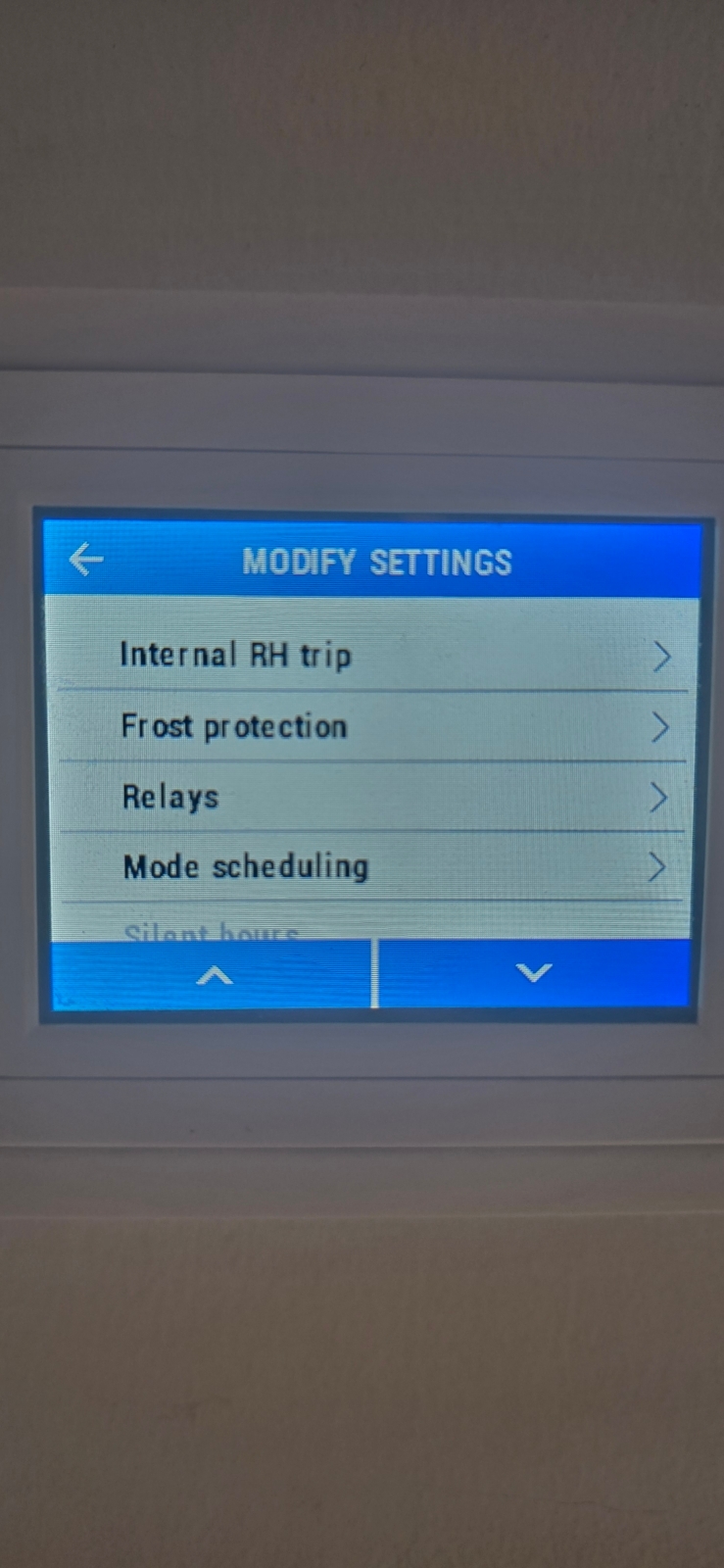
Many MVHR units include features such as summer bypass, frost protection, and sometimes a pre-heater. Therefore, it helps to understand the basics:
- Summer bypass: often used to reduce overheating by bypassing heat recovery when it is beneficial. However, settings vary by unit, so follow manufacturer guidance.
- Frost protection / pre-heater: helps protect the unit in cold weather. Additionally, this can affect airflow behaviour during freezing conditions.
If you are unsure how these are configured, an airflow test and service can confirm the unit is operating as intended.
Filter replacement and maintenance
Maintenance is straightforward, but it is not optional. If filters clog, airflow falls, and performance becomes inconsistent. As a result, you may see more condensation, more noise, and poorer comfort.
Filter replacement schedule (MVHR)
- Replace MVHR filters every 6–12 months in typical Irish residential conditions.
- Check sooner if you are near a busy road, doing renovations, or noticing dust build-up. During each check, vacuum the filters gently (where the manufacturer allows), because this can remove loose dust and help maintain airflow between replacements
Additionally, do not assume filters are washable, because many are designed for replacement only.
Professional servicing schedule
- MVHR service every 1–2 years (recommended), because internal hygiene checks, fan condition, condensate drainage, and verification of controls matter over time.
- MEV servicing at least every 3 years, because fan wear, valve condition, and extract performance can drift without obvious warning signs.
Importantly, if the system was never commissioned properly, or if ductwork access is difficult, a full rebalance may not be achievable in a single short visit. In that case, a planned test-and-adjust approach is typically the most reliable route.
Quick homeowner checks you can do safely
You can catch many issues early with simple checks:
- Listen for new noise: rattling, scraping, or an unusual hum can signal fan wear or imbalance.
- Look for persistent condensation: especially in bedrooms or on mornings with normal heating.
- Confirm boost works: you should notice a clear increase in extraction during showers or cooking.
However, avoid dismantling internal electrical components unless you are trained, because incorrect reassembly can cause leaks, vibration, or damage.
Compliance note for Ireland
Ventilation is not only about comfort; it also supports compliance and energy outcomes. Therefore, it is sensible to align operation and maintenance with the intent of TGD Part F (Ventilation) and, where relevant, TGD Part L (Energy).
Additionally, good installation and commissioning practice is aligned with Irish guidance such as S.R. 54 and relevant product testing standards. In practice, this is why measured airflow checks are so valuable: they confirm performance rather than guessing.
FAQs
Should I turn my ventilation system off to save electricity?
No. Instead, keep normal mode running continuously, because steady airflow prevents moisture build-up and stale air.
Can MVHR fix high humidity in summer?
It can dilute short spikes. However, it cannot dry humid outdoor air, so you should use boost only for events and consider a dehumidifier during extreme humidity.
How often should I replace MVHR filters?
Replace them every 6–12 months in typical conditions. Additionally, replace sooner in dusty environments or during renovations.
How often should I service MVHR and MEV?
Service MVHR every 1–2 years. Service MEV at least every 3 years, or sooner if performance drops or noise increases.